


On Women's Day, March 8, we want to share the stories of 5 Portuguese women who fought for their rights and have excelled in their fields. While there are certainly many more, it's important to acknowledge that countless women have existed in the shadow of historical events, at least in the information that is available to us today, often relegated to the background in the press, literature, or historical documents that populate archives. Nevertheless, against all odds, numerous women have accomplished something incredibly challenging: standing out in history, which has largely been written by men.
1) ANTONIA FERREIRA
Heiress to the Ferreira wine cellars, she was born in 1811. She was widowed at the age of 33, at which point she assumed control of Casa Ferreira, established by her grandfather, and embarked on her career as a successful businesswoman in a male-dominated world. She expanded the business by acquiring new farms and warehouses and hiring more workers. Renowned for her generosity and exemplary treatment of her workers, she commissioned the construction of schools for the children of her employees to ensure they received a quality education. Additionally, she engaged in numerous charitable endeavors. Affectionately nicknamed "Ferreirinha" and known as the "mother of the poor," she personally oversaw the production at her numerous farms, serving as a remarkable example of entrepreneurial spirit. During a period when vineyards were decimated by a phylloxera plague, she championed the advancement of research into modern wine production techniques, implementing new fumigation and irrigation technologies. Upon her passing in 1896, she left behind a substantial fortune and nearly thirty estates. The legend of her perseverance and benevolence spread from the Douro river to the entire world.

Antonia Ferreira.
2) CAROLINA BEATRIZ ANGELO
Carolina Beatriz Ângelo was a trailblazer in many respects, standing as one of the first Portuguese women of her time. She made history as the inaugural female physician to perform operations at São José Hospital in Lisbon, the foremost woman to be recognized as the "head of the family," and, most notably, the pioneer woman to cast a vote in 1911.
A suffragette and feminist, Carolina Beatriz Ângelo was remarkably ahead of her era. In 1909, she played a pivotal role in the formation of the Republican League of Portuguese Women (LRMP), a staunch supporter of republican principles, women's suffrage, the right to divorce, children's education, and parity in rights and duties between men and women.
As a widow responsibly caring for her daughter, Maria Emília, she invoked her right in court to be acknowledged as the "head of the family," thereby becoming the first woman to vote in the country during the constituent elections on May 28, 1911. However, to prevent such a precedent from recurring, the following year saw an amendment to the Portuguese electoral code, stipulating that only male heads of households could exercise their right to vote. Despite this setback, Carolina Beatriz Ângelo persisted in her advocacy for women's rights, continuing her impactful social work.

Carolina Beatriz Angelo.
3) AMALIA RODRIGUES
Amália da Piedade Rodrigues was a Portuguese actress and fado singer, widely hailed as the voice of Portugal and one of the most exceptional singers of the 20th century. Regarded as the most successful Portuguese artist of all time, she is interred in the National Pantheon alongside other eminent Portuguese figures.
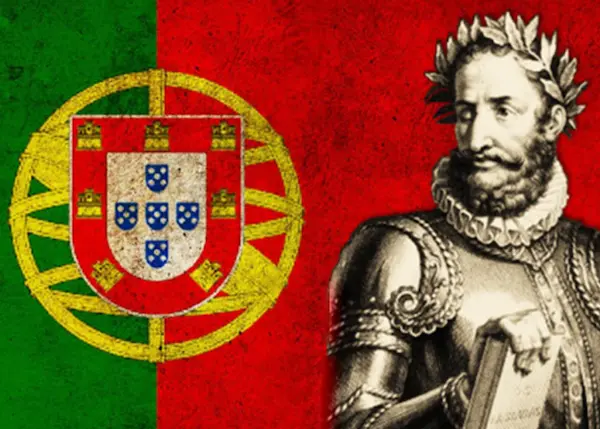
Globally recognized as the Queen of Fado, Amália da Piedade Rodrigues was celebrated as one of the finest ambassadors of this musical genre, given its profound significance in Portuguese culture. She graced numerous television programs worldwide, showcasing not only fados but also contemporary songs and even pieces of music from foreign origins. A significant contribution to the history of fado was her innovation in singing poems by esteemed Portuguese authors, such as the verses of Luís de Camões, which she set to music.
Amália da Piedade Rodrigues ardently propagated Portuguese culture, the Portuguese language, and the art of fado, leaving an indelible mark on the musical heritage of Portugal and beyond.

Amalia Rodrigues.
4) CELESTE CAEIRO
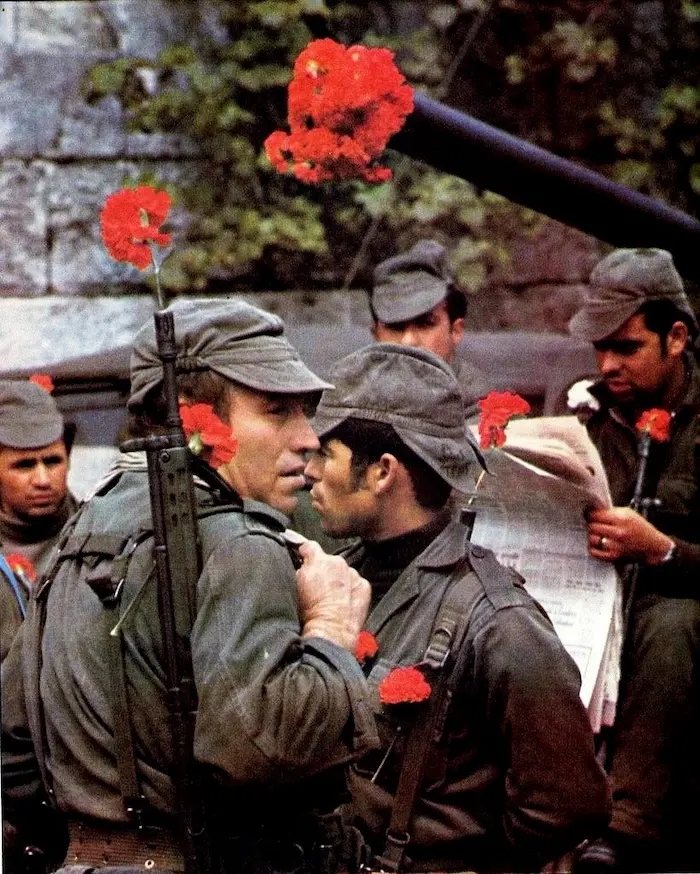
Celeste Martins Caeiro is the woman who lent her name to the revolution of April 25, known today as the Carnation Revolution. On April 25, 1974, when she arrived at the restaurant where she worked, the owner informed her that they would not be opening that day due to an ongoing revolution aimed at toppling the dictatorial regime led by Marcelo Caetano, which had previously been led by Antonio Oliveira Salazar, spanning a duration of 48 years (1926-1974).
It happened to be the restaurant's anniversary, and the owner had purchased a bouquet of flowers (carnations) as a gift for the women who were expected to dine at the establishment. However, as the restaurant remained closed due to the revolution, the owner allowed Celeste to take the flowers home. En route to her residence, near the Rossio metro station, a soldier approached her to request a cigarette. Since she did not smoke, the only offering she had was a carnation, which the soldier accepted and placed in the barrel of his rifle. Following this gesture, she distributed carnations to other soldiers en route to the Carmo Barracks. Subsequently, the nearby florists began to emulate this act. As a result of Celeste's actions, the revolution became known as the Carnation Revolution. This enduring legacy stands as a testament to Celeste's significant contribution.

Mural en conmemoración a Celeste Caeiro.
5) FLORBELA ESPANCA
Florbela Espanca stands as one of the greatest poets of Portugal, and consequently, one of the most significant Portuguese poets of all time. Despite her brief life of merely 36 years, it was replete with turbulence, restlessness, and profound inner anguish, all of which she adeptly transmuted into poetry of the highest caliber, brimming with eroticism and femininity.
During her short existence, she crafted some of the most exquisite poems and stories that endure in the collective memory of the Portuguese people. She left an indelible impression on her contemporaries, as well as on the literary community and the public of her era and beyond. Not only did her verses influence numerous other poets, but she also garnered tributes from esteemed poets in homage to both her human and lyrical persona. Moreover, a library in the city of Porto, Matosinhos, stands as a testament to her enduring legacy, bearing her name in honor of her profound literary contributions.

.webp)